1909-S VDB Wheat Penny Value: What Is It Worth in 2026?
Getting this graded by PCGS or NGC before selling usually pays off. Authentication matters too: fakes of key dates are common.
Value by condition
| Good (G-4, heavily worn) | $860 |
| Very Good (VG-8) | $929 |
| Fine (F-12) | $1,064 |
| Very Fine (VF-20) | $1,187 |
| Extremely Fine (XF-40) | $1,345 |
| About Uncirculated (AU-50) | $1,599 |
| Mint State (MS-63, uncirculated) | $2,498 |
The undisputed king of the Wheat Penny series: only about 484,000 were struck, combining the first year of issue, the San Francisco mint, and the short-lived VDB initials. Fakes are everywhere — get professional authentication before paying or accepting four figures.
Specifications of a 1909 wheat cent
- Weight:
- 3.11 g
- Diameter:
- 19.05 mm (0.75 in)
- Composition:
- 95% copper, 5% tin and zinc
- Edge:
- Plain (smooth, no reeds)
- Designer:
- Victor David Brenner — initials VDB appear on some 1909 issues
What a 1909 wheat penny looks like
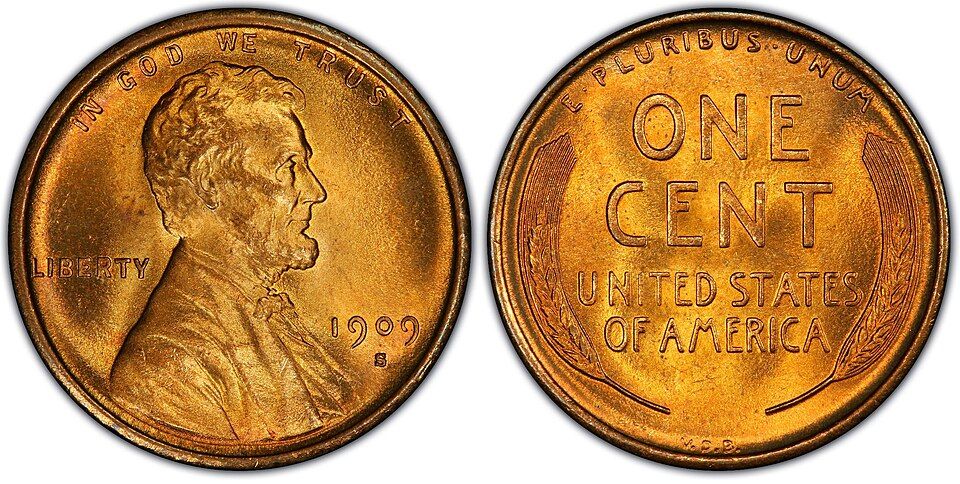
The base design is the same as the photo — the VDB variety is described in the sections below.
How to judge the condition of your coin
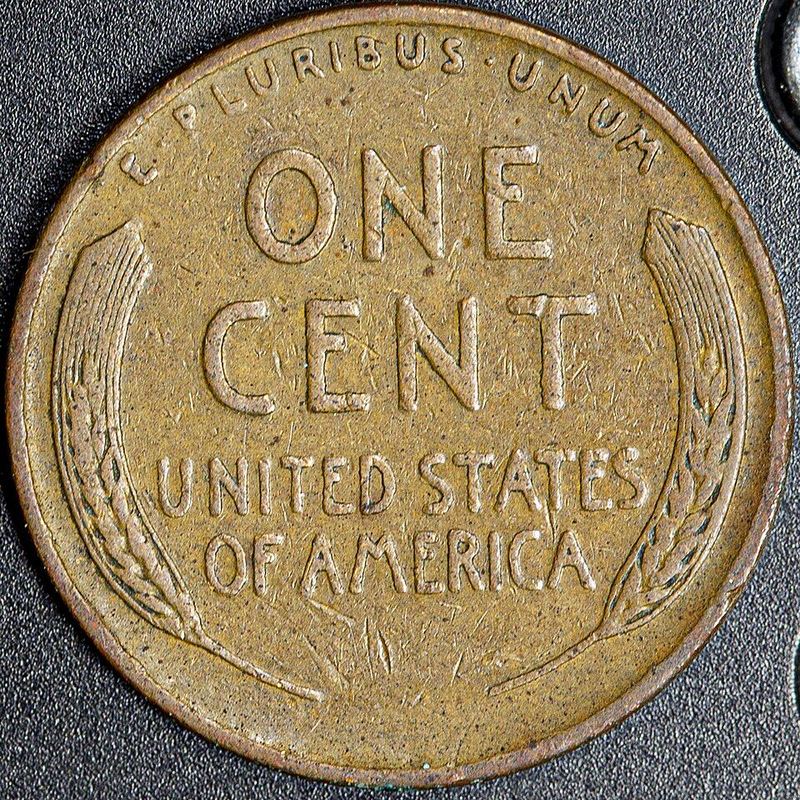
- Look at the wheat stalks first. On a worn coin (like the photo — about "Good" grade), the stalk lines are mostly smooth. If every line and grain in the stalks is sharp, you are looking at Extremely Fine or better.
- Then check Lincoln's cheek and jaw. These are the highest points on the front. Wear shows there before anywhere else; a flat cheek means a lower grade.
- When in doubt, grade down. Sellers systematically overgrade; use the lower row of the price table and you will not be disappointed.
Worn-coin photo: Mark Morgan, CC BY 2.0, via Wikimedia Commons.
1909 penny: mints compared
| Version | Mintage | Value range |
|---|---|---|
| 1909 Wheat Penny | ~72.7 million struck | $3.62–$30 |
| 1909-S Wheat Penny | ~1.8 million struck | $103–$498 |
Mintage and value can differ a lot by mint mark — compare the versions above before assuming yours is the common one.
The 1909-S VDB: king of the wheat pennies
The 1909-S VDB is the most famous key date in the entire Lincoln cent series. Designer Victor David Brenner's initials VDB appeared prominently on the reverse at launch, but public criticism led the Mint to remove them within days. San Francisco struck only 484,000 before the change, a tiny mintage by wheat penny standards, and collectors have chased it ever since.
Even in Good condition it brings around $860; mint-state examples reach $2,500 and well beyond for red gems. The combination of fame and value makes it one of the most counterfeited coins in America: common tricks include adding a fake S to a 1909 VDB Philadelphia coin, or altering a 1909-S (no VDB). Check that the S has parallel serifs and that the VDB sits centered at the bottom of the reverse between the wheat stalks.
Never buy or sell a 1909-S VDB raw at this price level. PCGS or NGC certification is essentially required for a fair transaction — it protects both sides and typically adds more to the sale price than it costs.
How to confirm it's genuine
- The mint mark sits directly below the date — it should be the letter "S". A magnifier with light at a 45° angle works best.
- Never clean the coin: cleaning destroys the original surface and can cut the value in half.
- 1909-S VDB fakes are everywhere: the genuine S has parallel serifs, and the VDB initials sit centered at the bottom of the reverse between the wheat stalks. Lettering details are the key to authentication.
- For any coin worth more than $200, PCGS/NGC grading fees (~$20–50) are money well spent.
Where to sell this coin
- eBay works best in the $1.00–$200 range. Take clear photos of both sides in natural light, and put the year, mint mark, and approximate grade in the title.
- A local coin dealer is the fastest way to cash out, but expect 60–70% of guide prices. Best for selling common dates in bulk.
- Graded high-value coins do best at auction houses like Heritage Auctions or Stack's Bowers, where realized prices are public.
Common questions about the 1909-S VDB Wheat Penny
How much is a 1909-S VDB Wheat Penny worth?
Guide values run from $860 in Good (worn) condition up to about $2,498 in MS-63 uncirculated. These are retail guide figures, not offers to buy — a dealer typically pays 60–70% of guide, and top auction results for superb grades can exceed them. Check the grade table on this page against your coin's actual wear before assuming a number.
Where is the mint mark on a 1909 wheat penny?
On the front (obverse), directly below the four-digit date 1909: a small "S" below the date confirms the San Francisco Mint. The mint mark matters — the same year can have very different values at different mints, which is why this site lists each mint separately.
How can I tell if mine is the VDB variety?
The VDB initials sit centered at the bottom of the reverse, between the wheat stalks, and the S mint mark sits below the date on the front. Genuine 1909-S VDB cents have an S with parallel serifs; fakes with added S marks or added VDB initials are common, so authentication by PCGS or NGC is strongly recommended.
Should I get my 1909 penny professionally graded?
Yes, if the coin is genuinely uncirculated or shows the key diagnostics for this issue. This is a coin where grading (roughly $20–50 at PCGS or NGC) can pay for itself, because certified examples sell for meaningfully more than raw ones. Have it looked at before attempting any cleaning — cleaning destroys value.